
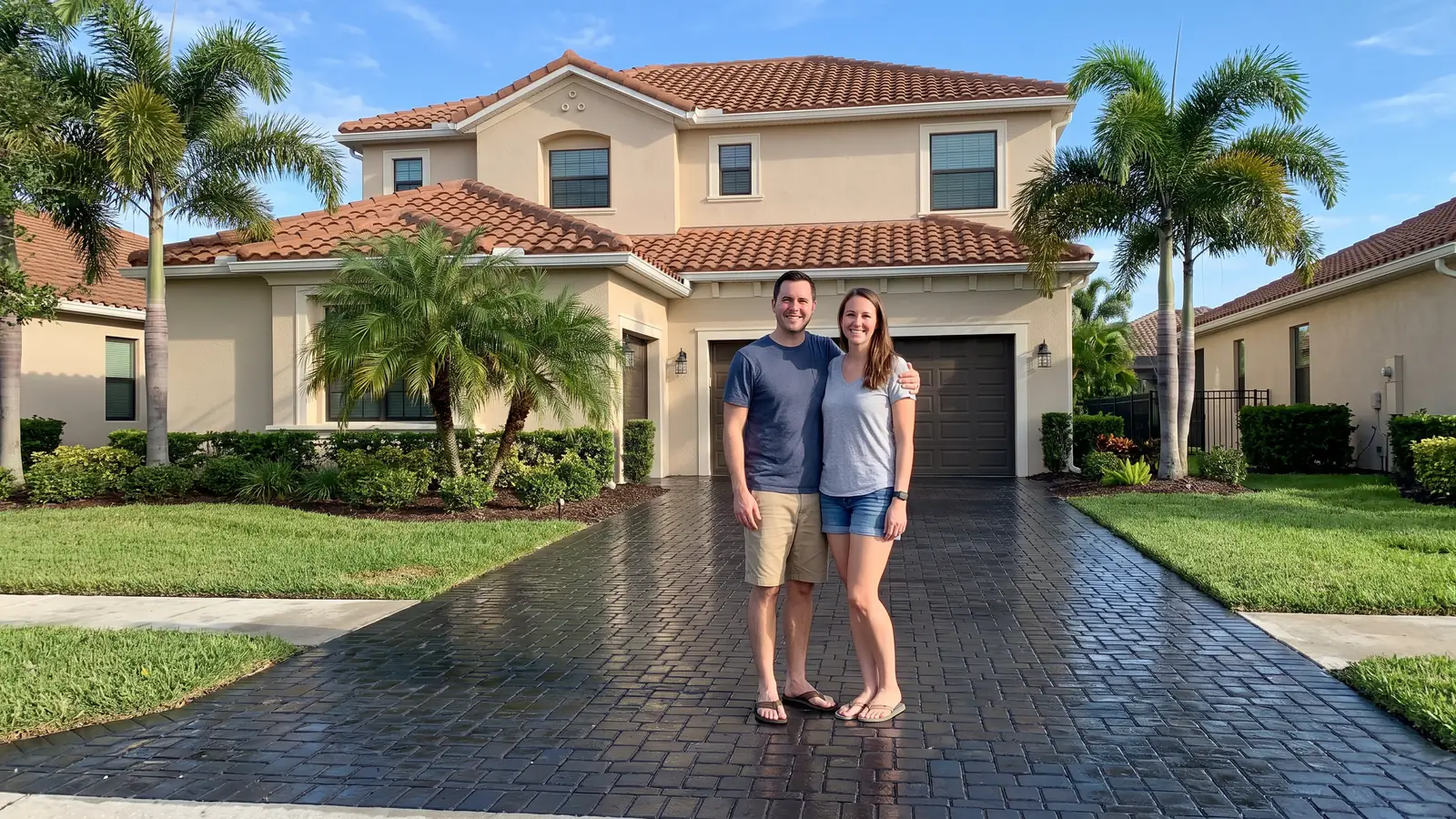
Paver sealing for Jacksonville Beach homes
Paver Sealing in Jacksonville Beach, FL
Homes in Jacksonville Beach range from 1920s Sea Grove to 1980s Ocean Terrace, so call (904) 849-6734 for a free estimate.
- Brings out deeper paver color
- Fresh joint sand helps lock pavers in place
- Gives weeds less room to grow
- Makes the surface easier to keep clean
- Free estimate, no obligation
Request a Free Estimate
Free, no obligation.
Fast, careful paver sealing in Jacksonville Beach
Paver sealing is available across Jacksonville Beach, from the 1920s blocks of Sea Grove to the 1980s streets around Ocean Terrace. A local contractor washes, re-sands and seals driveways, pool decks and walkways, and the first estimate is free. Request through book your free estimate and the reply arrives in 1 business day or less, usually much sooner.
Picture a pool deck with white salt marks along the edge and a driveway apron gone dull where the tires turn. A wash, new sand and a fresh coat bring one even color back. Prefer to talk? Call (904) 849-6734 and describe the deck, drive or walk.
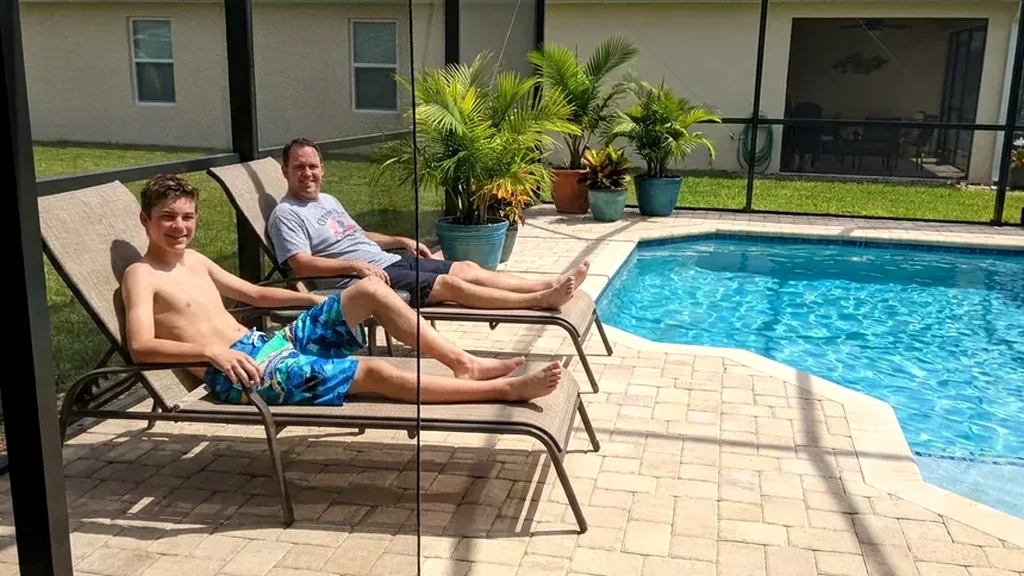
Why hire a local paver sealing contractor in Jacksonville Beach?
Jacksonville Beach homes span the 1920s to the 2000s, so one street can hold pavers of several ages and unknown sealers. A local contractor reads that mix, and book your free estimate is the way in.
Pier to Penman Road
Quotes are open across Jacksonville Beach, from Sea Grove near the ocean to San Pablo Terrace off Penman Road.
Prices on the record
The regional range is $1.75 to $3.25 per square foot, so any bid here can be held up against it.
Pool-safe finishes
Gloss without grit gets slick when wet, so matte or an anti-slip additive is the usual request for decks.
Landlord friendly
About 1 home in 9 sat vacant at the last census, and many are rentals, so owners who live elsewhere can ask too.
Get Your Free Estimate in Jacksonville Beach
Tell us about your pavers in Jacksonville Beach.
Free, no obligation
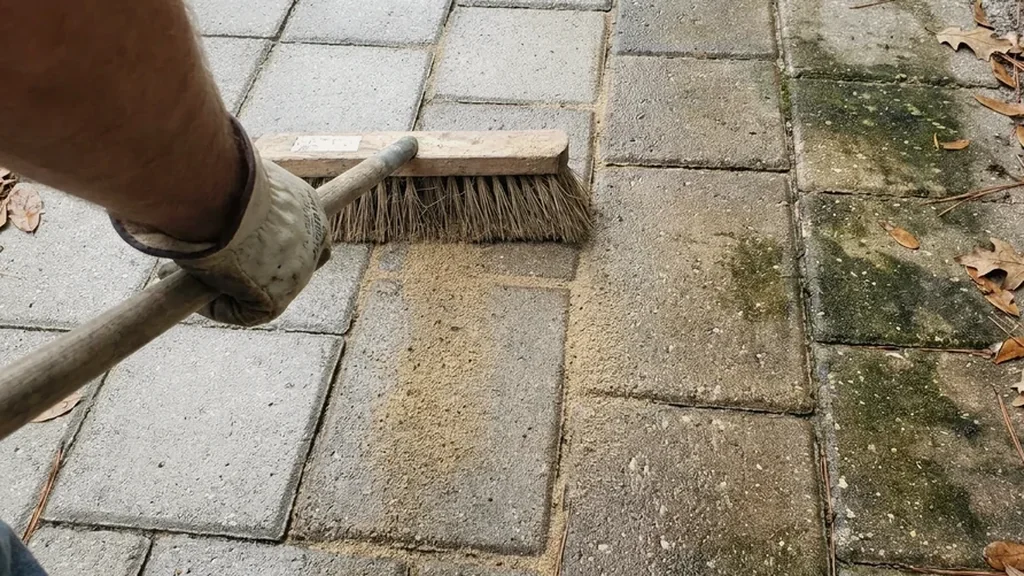
What paver problems show up most in Jacksonville Beach?
Salt marks on pale pavers
Water covers 66.61 percent of Jacksonville Beach, and a paver maker explains that airborne salt crystallizes on surfaces as moisture dries. Pale pavers show splash marks, salt residue and sand sooner than darker ones. Hurricane Matthew in 2016 pushed water over the dunes and inland to at least 2nd Street, so some lots have seen salt water directly, not just spray. If a deck or drive looks chalky near the edges, that is the pattern. Cleaning comes first, since sealer would trap the film. Hurricane Floyd destroyed the pier in 1999 and Matthew damaged it again in 2016, a reminder of how often storms reach this strip. After any surge, a rinse and a closer look at the joints is worth the time. A rinse with fresh water between visits keeps the film from returning.
Sealer that clouds in a wet month
June averages 6.79 inches of rain, August 7.54 and September 7.19, which makes summer the stretch when drying time decides a job. One Jacksonville company says nearly every complaint about sealer turning white traces to damp pavers or a coat laid on too thick. A cloudy coat is hard to hide, which is why drying time matters. A careful contractor waits for a surface that is dry through instead of chasing the calendar. Hurricane season runs June 1 to November 30 and peaks on September 10, so the wettest weeks and the stormiest weeks overlap. A Jacksonville cost guide suggests fall sealing after the season ends. Ask how long the surface will be left to dry before the first pass.
Joint sand lost to a downpour
Rain falls on about 122 days a year at Jacksonville Beach, and a record 1.76 inches on December 6, 2016 put part of First Avenue South underwater for hours. Driveways near 12th Avenue South flooded too. Water like that carries joint sand into the street, which leaves gaps where weeds start. Refilling the joints before sealing keeps the pavers locked together after the next storm. Joint sand lost near the street also lets soil in, and soil feeds weeds. Pulling weeds without refilling the joint leaves the same gap behind. A sandy planting bed beside the walk loses joint sand quickly, so point out any bed that touches the pavers.
A pool deck that turns slick
A Jacksonville paver company says gloss without an anti-slip additive is slippery when wet and that matte is safest near pools. Pool splash makes a smooth sealed deck worse, and bare feet leave no margin for error. Pick the finish for traction first and shine second. Some owners test a small corner of the deck before the whole area is done. Median age here is 44.1, and 19.1 percent of households have children under 18, so decks and driveways see plenty of wet feet and play. Ask about an anti-slip additive for the deck.
Pavers of mixed ages on one street
Sea Grove has 174 homes from the 1920s, San Pablo Terrace runs from 1955 to 2005, and Ocean Terrace dates to the early 1980s. Pavers on those lots went in at many different times, often with products nobody wrote down. Water-based and solvent-based sealers do not mix, so the old coat is identified first. A short talk with a neighbor or the previous owner can turn up a name, and photos of past repairs help the first visit. The city grew from 6,430 people in 1950 to 12,049 in 1960, so a lot of the housing stock arrived in a hurry and has been repaired in layers since. Bring up any past repairs, since patched areas often hold a different color.
Do Sea Grove, San Pablo Terrace and Ocean Terrace need different paver work?
Sea Grove, San Pablo Terrace and Ocean Terrace
Yes, because the three areas were built in different decades and wear in different ways. Sea Grove has 174 homes from the 1920s, San Pablo Terrace off Penman Road runs from 1955 to 2005, and Ocean Terrace dates to the early 1980s. A century of building means a century of pavers, patches and past coats. Name your area when you book your free estimate.
Home size and HOA rules near South Beach Park
San Pablo Terrace has a median living area of about 1,646 square feet, which points to mid-size homes and mid-size paver areas. Ocean Terrace has a confirmed HOA and sits near South Beach Park. If your street has an association, ask what it requires before you book. Then call (904) 849-6734 with the answer.
Mid-century homes in South Pablo Beach
South Pablo Beach has a walkable grid near the ocean, and mid-century modern homes, many by architect William Morgan, give the city another style. A quiet matte finish can suit a house like that, since gloss would compete with the architecture. For any of these styles, book your free estimate and mention the year the house was built.
What does paver sealing cost in Jacksonville Beach?
Cost per square foot at the beach
Price follows area, and the published range for Northeast Florida is $1.75 to $3.25 per square foot to clean, sand and seal. At the beach, salt film, missing sand and layered old coats decide where a quote lands inside that range. Ask that the square footage be written on the estimate. To price your own pavers, book your free estimate.
Courtyards, side yards and stairs
A condo-style courtyard or a narrow side yard adds hand-carrying time, and so does a flight of stairs. Small areas also run higher per foot, because setup is the same at any size. A rental with a deck, a drive and a walk is often quoted as one visit. Call (904) 849-6734 to learn which of these apply.
| Paved area | Typical example | Clean, sand and seal |
|---|---|---|
| 300 sq ft | Small patio or walkway | $525 to $975 |
| 600 sq ft | Two car driveway | $1,050 to $1,950 |
| 1,000 sq ft | Large driveway or pool deck | $1,750 to $3,250 |
| 1,500 sq ft | Driveway plus pool deck | $2,625 to $4,875 |
Math based on the $1.75 to $3.25 per square foot that Northeast Florida paver companies published as of November 2026. Your contractor sets the actual price after seeing the surface. Repairs, leveling and stripping failed sealer are usually extra.
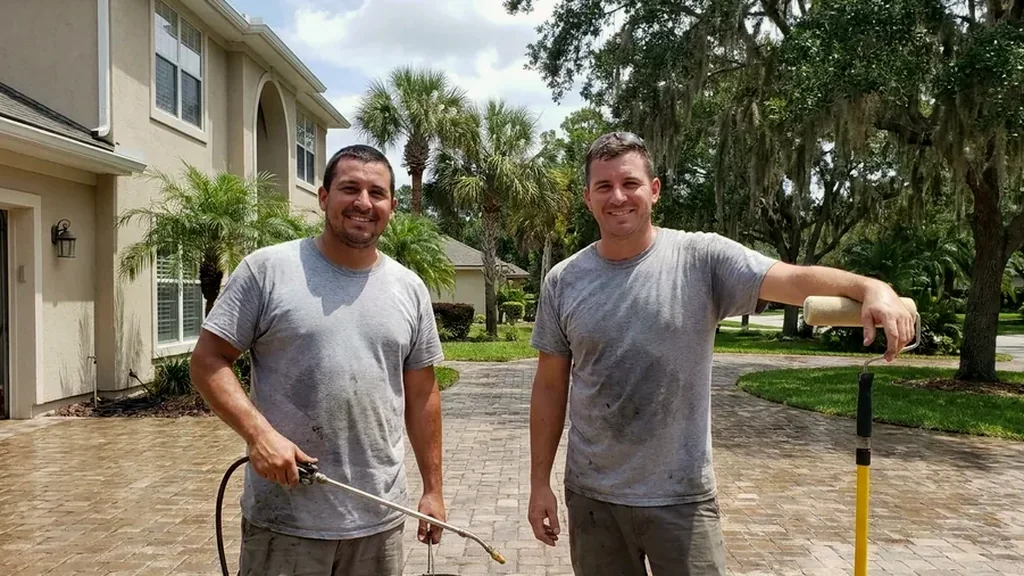
How does a paver sealing job work in Jacksonville Beach?
Survey, measure, trace the old coat
Price follows square feet, so the first job is measuring every deck, apron and walk. Low or lifted spots are reset first, since a coat locks in whatever it covers. Sealers do not stack, so the old product is traced as well. A 1920s Sea Grove house and a 1980s Ocean Terrace home call for different questions.
Wash off the beach film
Salt marks, tire rubber and green growth in shaded corners come off in the wash. Pale pavers near the ocean can need a second rinse, while a darker drive inland often needs less. Stains get treated now, so the coat does not seal them in. Water is aimed away from doors and plants beside the deck.
Replace the sand
A wash empties joints, so fresh sand is swept in and the surface cleared. A Jacksonville paver company says the sand goes in before the sealer, never after it. After a wet summer this stage takes longer. Full joints stop shifting and starve weeds.
Dry all the way through
August and September are the wettest months, so drying time is not a formality. A shaded deck can stay damp long after a sunny drive. Damp pavers are the usual reason a coat turns white. The contractor waits for a surface that is dry through.
Coat it and stay off
The chosen finish is sprayed and back-rolled in, often matte by a pool. One Jacksonville company says to expect walking in a few hours and parking after about a day. Quotes for the next coat run two to five years out. Ask for an inspection date for the next coat.
Complete paver services in Jacksonville Beach
Washing off salt film and growth
The wash is the stage you can see from the street. It lifts salt film, tire rubber and green growth off decks, aprons and walks, and then fresh sand goes in. Sealer comes after a dry spell. To hear how that plays out on your property, call (904) 849-6734.
Decks, aprons and walks each need something different
Treat each surface as its own small project. A deck needs traction, an apron needs scuff resistance at the curb, and a walk needs an even color from door to sidewalk. Share your list when you book your free estimate and the plan follows from it.
Matte or wet look finish
Finish drives the look. Matte reads quiet and keeps traction near water, and a wet look pops color but shows drive-lane wear sooner. One Jacksonville company says switching finishes later means stripping the old coat. To see samples, call (904) 849-6734.
Booking around rain and hurricane season
Match the job to the weather. November averages 2.50 inches of rain, August and September top 7 inches each, and hurricane season ends November 30. A fall date after the season, or a spring date before the humidity, fits many schedules. To check open days, book your free estimate.
Questions to ask before you hire
- How long do the pavers dry after the wash before the sealer goes on?
- What can you do about the white powder that keeps coming up on my pavers?
- Is there anything I should move, or a gate I should leave open, before you arrive?
- Will the sealer make my pavers darker, and by how much?
- Do you seal in the morning or later in the day, with how hot the pavers get by noon?
- Do you treat the weeds and ant hills in the joints, or only pull what shows?
- Will the person who gives me the estimate be on site for the work?
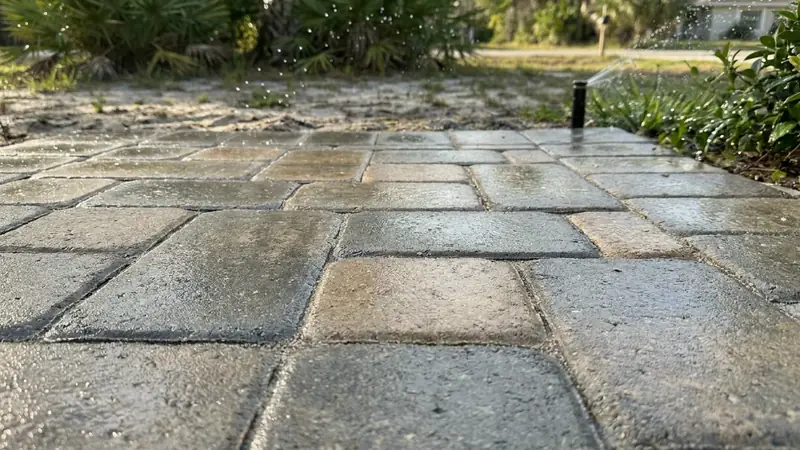
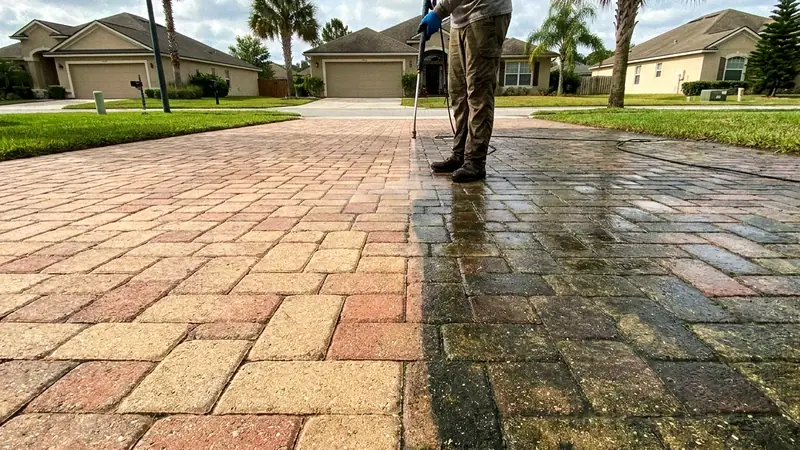
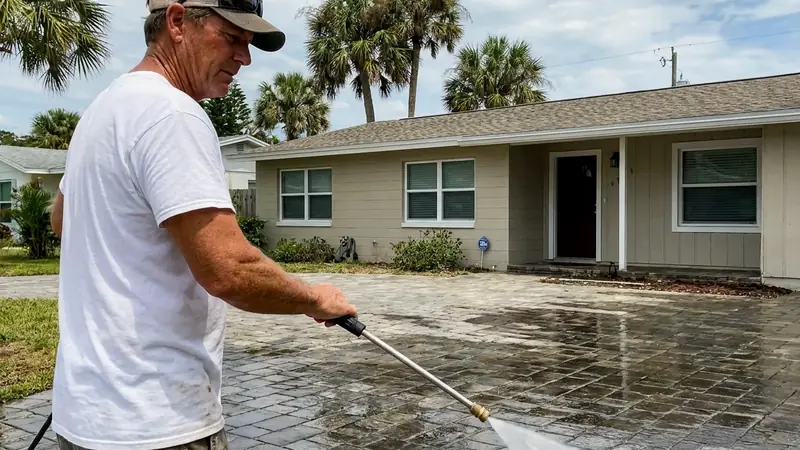
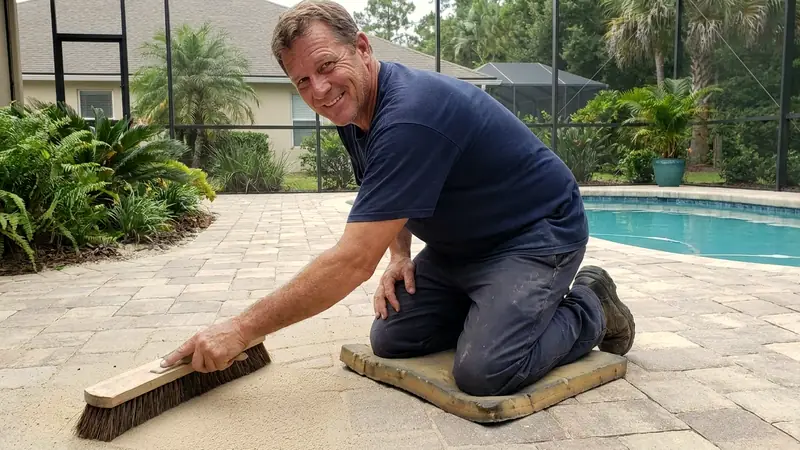
What do sealed pavers look like around Jacksonville Beach?
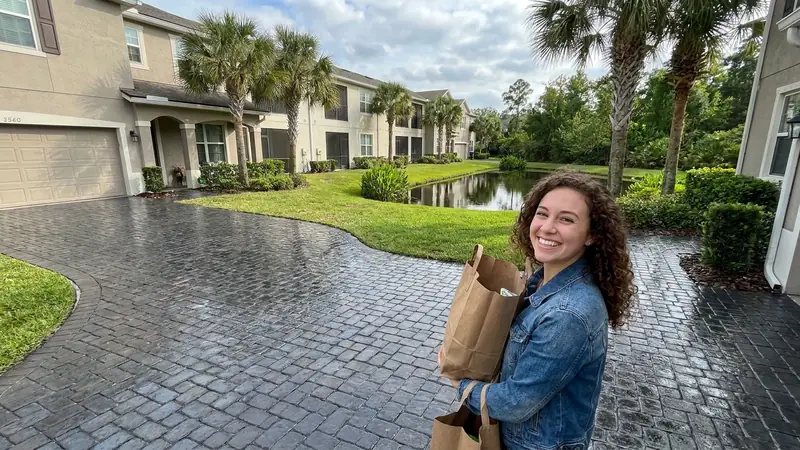
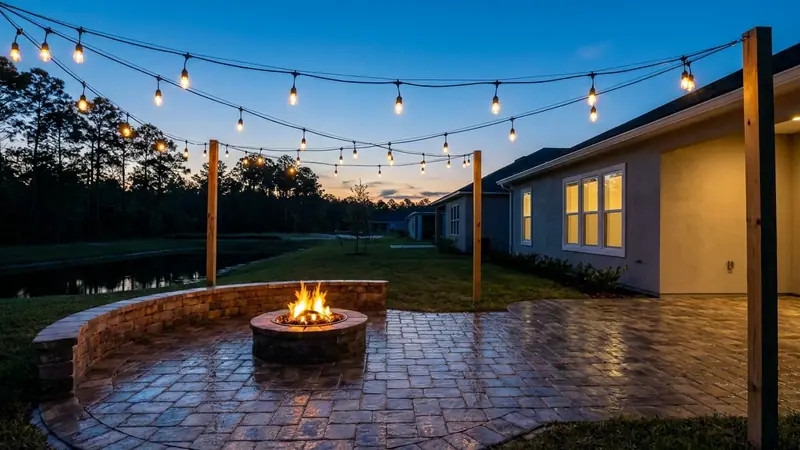
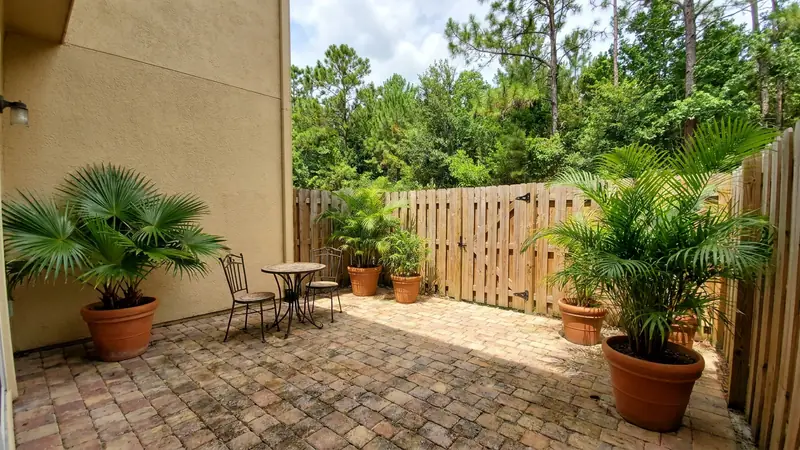
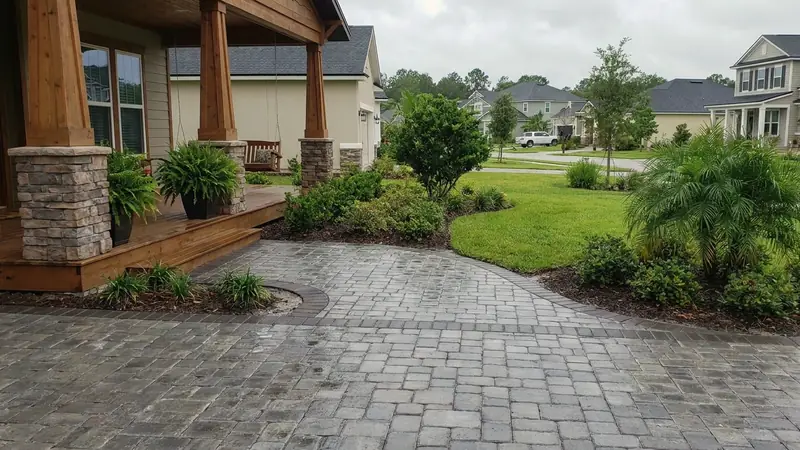
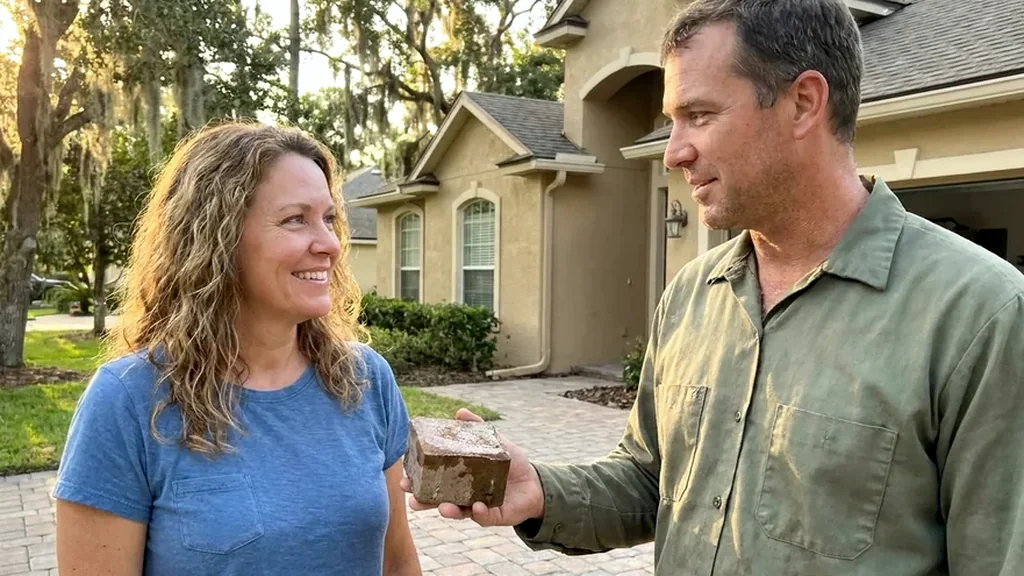
Why local matters in Jacksonville Beach
Pavers from three building eras on one street
A contractor who works Jacksonville Beach has seen a 1920s Sea Grove house, a 1960s ranch and a 1980s townhome on the same few blocks. Each came with its own pavers and its own history of coats. That mix sets how much cleaning and sand the first visit needs. To reach someone who knows these blocks, call (904) 849-6734.
Wet months and dry months in Jacksonville Beach
Rain and storms set the calendar here. August and September top 7 inches of rain each, November drops to 2.50, and hurricane season runs through November 30. A local scheduler plans around those numbers instead of booking blind. To ask which month fits your lot, book your free estimate.
Right-of-way permits for curb aprons
City paperwork is part of local knowledge. Jacksonville Beach says many owners use right-of-way beside their homes and that most of it needs an encroachment permit. A paver apron at the curb can sit in that strip. If yours might, book your free estimate and have the contractor check with the city first.
Which Jacksonville Beach landmarks help a contractor find my street?
Casa Marina and the 1947 lifesaving station
Start with Casa Marina Hotel, the Mission-style landmark finished in 1925 and listed on the National Register in 1993. The Art Moderne lifesaving station from 1947 is another reference point, and the city has carried its present name since June 15, 1925. Before that it was Ruby in 1884 and Pablo Beach from 1886. If you live near the hotel, call (904) 849-6734 and say so.
Seawalk Pavilion, the Beaches Museum and the pier
Latham Plaza and Seawalk Pavilion at 11 1st Street N host events and gatherings, and the Beaches Museum at 381 Beach Boulevard keeps an 1886 chapel and a 1911 train engine. The pier reopened July 6, 2022, after a three-year rebuild that followed storm damage. Tell the contractor which landmark is closest when you book your free estimate, and add your cross street. Hurricane Floyd destroyed the original pier in 1999, and it was rebuilt five years later before Matthew and Irma damaged it again.
Frequently Asked Questions
Why is paver sealing so expensive in Jacksonville Beach?
Hours of labor sit behind the price: washing, re-sanding, drying and a careful application. The sealer itself is the smaller share. Small decks and walks run higher per foot because setup does not shrink with the area. Pool decks and walks near the ocean often need extra rinsing, which adds time to the quote. The quote can show where the money goes.
How long does paver sealing last in Jacksonville Beach?
Quotes usually span two to five years. Salt air, pool splash and tires push a Jacksonville Beach surface toward the short end. If water darkens the paver and sinks in rather than beading, the coat is finished. Pale pavers show salt residue sooner, so a light deck may look tired before the coat has worn out. Ask when to inspect the coat next.
How much does it cost to re-sand and seal pavers in Jacksonville Beach?
Expect $1.75 to $3.25 per square foot, the published Northeast Florida range for cleaning, sanding and sealing. Salt film, missing sand and old coats shift where you land. Ask that the quote show square feet. Sea Grove and other older lots may also have patched joints that need extra sand.
What do professionals use to seal pavers near the ocean?
Pros choose between water-based and solvent-based sealers, and what is already down limits the choice. Many spray the sealer and then back-roll it into the joints. Get the product name in writing. Near pools, many pros reach for matte or add grit to gloss. A written product name also helps a board or a later buyer.
Is it better to spray or roll paver sealer?
Contractors usually do both. A spray gives even coverage, and a back-roll works the sealer into joints and levels puddles. On a pool deck, ask whether an anti-slip additive is included. Ask whether the contractor sprays and back-rolls in one pass or in two thin coats. Ask to see both on a small patch.
When is the right time of year to seal pavers in Jacksonville Beach?
November is the driest month at 2.50 inches, and a Jacksonville cost guide favors fall after hurricane season. Spring works too, before summer humidity builds. Any season does if the pavers are dry. Hurricane season runs through November 30, so a fall booking waits until the season ends.
Do I need a permit to seal my Jacksonville Beach paver driveway?
That depends on where the pavers sit. The city says most right-of-way use needs a revocable encroachment permit, so an apron in the city strip is worth checking. The city also updated its paver driveway standards in October 2023, so new paver work is a different conversation from sealing. Ask the city about your address first.
Why does fresh sealer sometimes turn white in Jacksonville Beach?
Nearly every case traces to damp pavers or a coat laid on too thick, according to a Jacksonville paver company. Humid months make drying time matter. A contractor who waits for a dry surface avoids it. A contractor may suggest a test patch in a hidden corner before coating the full deck.
Ready for a Free Estimate in Jacksonville Beach?
Call (904) 849-6734 and tell us about your pavers.
Free, no obligation