
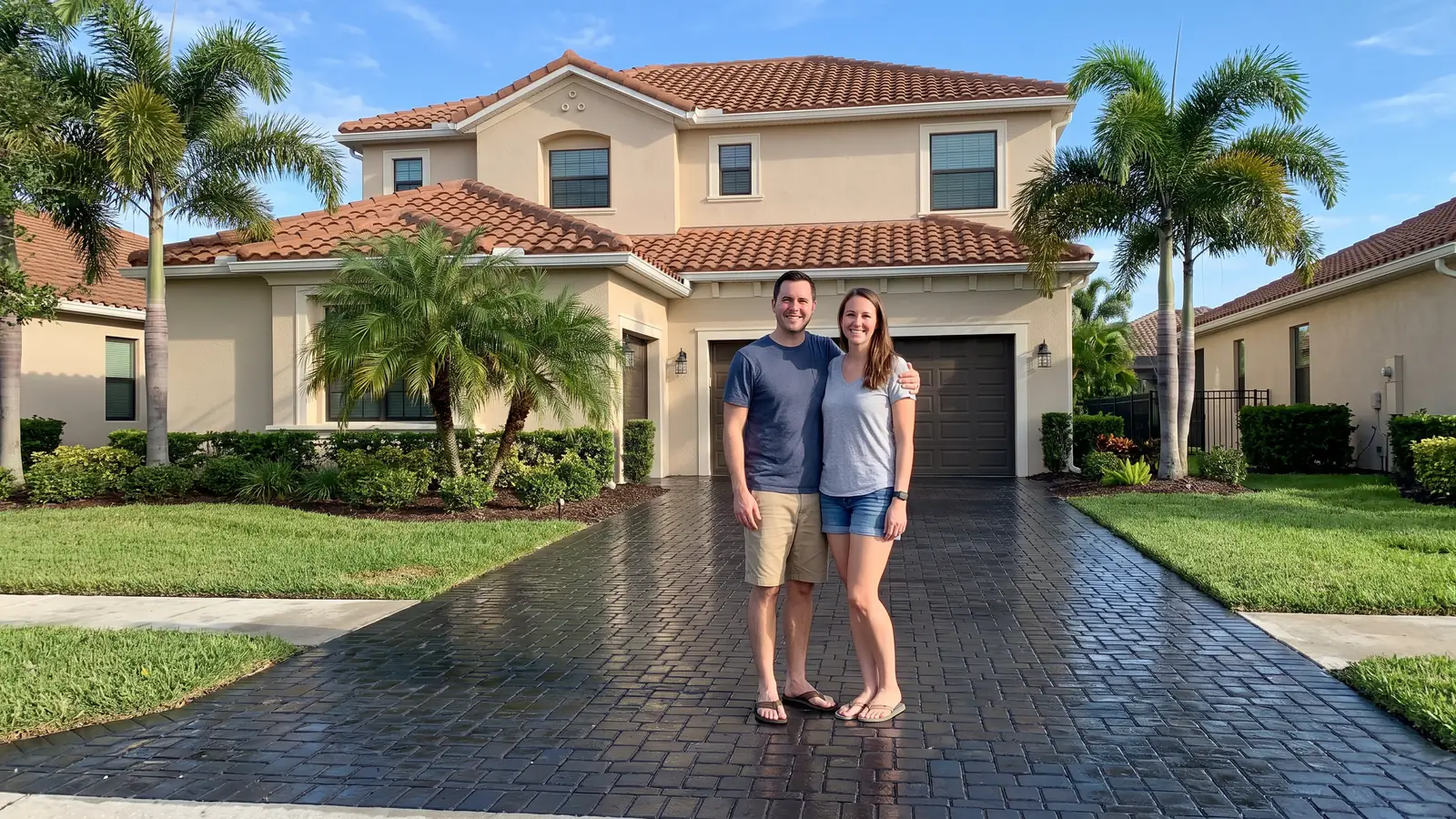
Paver sealing for Brentwood homes
Paver Sealing in Brentwood, FL
Brentwood bungalows from the 1913 plat and newer Hope VI homes both get free sealing estimates; call (904) 849-6734.
- Brings out deeper paver color
- Fresh joint sand helps lock pavers in place
- Gives weeds less room to grow
- Makes the surface easier to keep clean
- Free estimate, no obligation
Request a Free Estimate
Free, no obligation.
Fast, careful paver sealing in Brentwood
Paver sealing is on offer in Brentwood for porch walks, driveways and patios, with a free estimate first. A local contractor serves the bungalow blocks near Pearl Street and the newer homes by McNair Park. Use book your free estimate to start, and a reply comes in 1 business day or less, usually much sooner.
Maybe the path to the front steps has gone gray and the joints are filling with weeds and dirt. Once washed, re-sanded and coated, the walk looks like one piece again. To talk first, call (904) 849-6734 and tell the contractor what you see on your walk or drive.
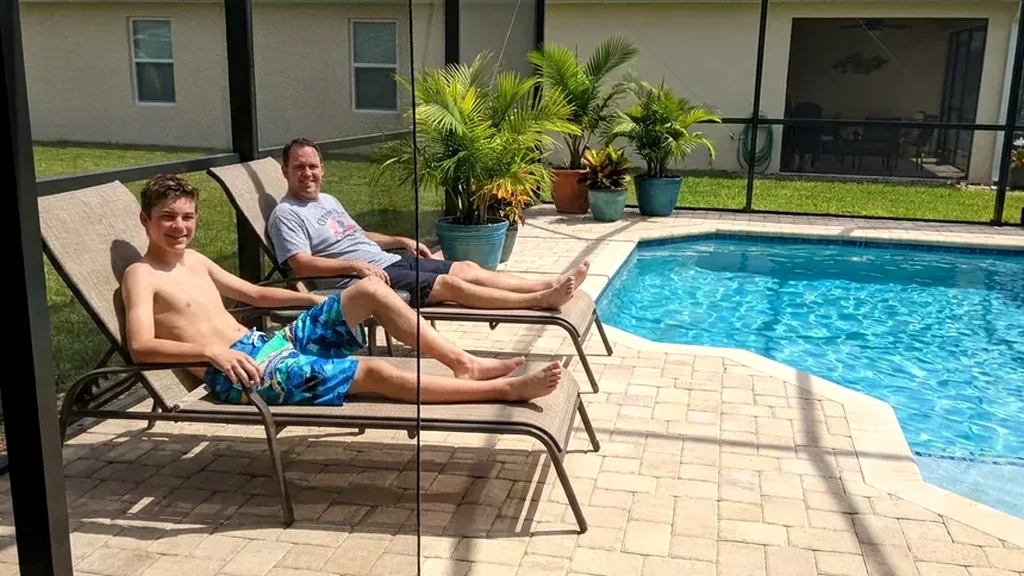
Why hire a local paver sealing contractor in Brentwood?
Brentwood has homes from a 1913 plat and homes from a much newer redevelopment, and the pavers beside them are different ages. A local contractor can tell the difference, and to begin you can book your free estimate.
Pearl Street to McNair Park
Quotes are open across Brentwood, from the 1913 bungalow blocks to the newer homes built under Hope VI.
A range to check bids
Published Northeast Florida prices are $1.75 to $3.25 per square foot for a wash, sand refill and seal. Hold any bid next to that band.
Rentals included
Owners of rentals can ask for a quote the same way residents do, and nobody is obligated to hire anyone.
New pavers can wait
One company says brand-new pavers should rest 60 to 90 days before a first coat, so a recent install gets a later date.
Get Your Free Estimate in Brentwood
Tell us about your pavers in Brentwood.
Free, no obligation
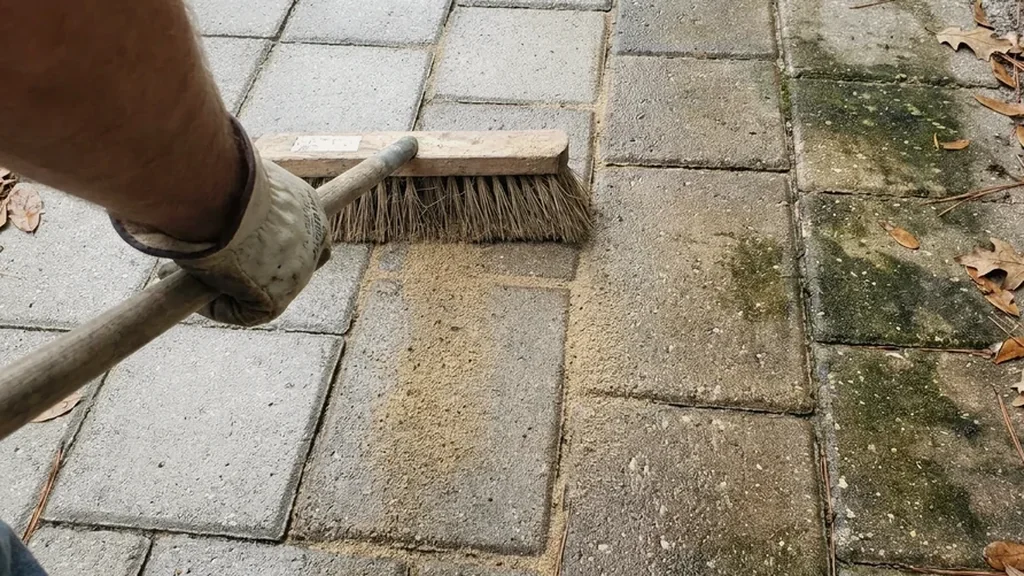
What paver problems show up most in Brentwood?
Marsh ground under old blocks
Brentwood was platted around wetlands and marsh straddling Longbranch Creek, and the 1913 lots average 50 by 100 feet. Ground that began as marsh can stay damp, and damp ground keeps pavers wet longer. Moisture feeds green growth along walks and fence lines. A contractor checks those spots by touch before any sealer goes on, and a low corner that holds water after rain is worth pointing out. The original plat's wet history is also a reason low spots sometimes return after heavy rain. Streetcars once ran on Woodbine Street, and some of the older walks near it were laid long before sealers existed. Brentwood Elementary dates to 1915, a reminder that these blocks have been settled for over a century.
Joints that empty each summer
Jacksonville receives about 52 inches of rain annually, much of it in short, hard summer storms. A Jacksonville company says summer rain washes sand out of unsealed joints. On a small Brentwood lot that water crosses the pavers on its way to the street. Sand can go with it, and weeds follow. A heavy summer storm can empty a thin joint quickly, and a cracked or gapped edge fails first. Old plantings along the walk can shed sand and soil into joints, so cleaning back the edges helps. A quick sweep before the wash clears loose debris from the joints so the water can do its work. ZIP 32206 counts 7,716 households, so there is a large pool of walks and drives sharing the same problems.
Pavers of two different ages
The 1913 bungalow blocks sit near homes built in the Hope VI project, where more than 325 homes went up next to McNair Park on ground where the first Brentwood Housing Project opened in 1939. Pavers on those lots were laid decades apart, often with unknown products. Sealer types do not stack, so the contractor identifies what is there first. Ask neighbors who added pavers who did the work, since a name or label can narrow down the old coat. The 1939 housing project was concrete block with tile roofs, a reminder that this ground has been rebuilt more than once. Homes from the Hope VI project and homes from 1913 may share a block, so one wash plan rarely fits both.
Cleaning near close neighbors
With lots of 50 by 100 feet and streets 50 feet wide, houses sit close together. Rinse water and overspray can drift toward a neighbor's fence, siding or car. A careful contractor masks what needs it and keeps the wash low. Tell the contractor about any shared fence or wall at the first visit. A good wash on a tight lot is slow, low-pressure work. Expect the contractor to ask where cars park and which fences sit on the property line. Tight lots also mean the sealer is sprayed in short passes so it stays on your pavers. With streets 50 feet wide and lots near 50 by 100 feet, a rinse hose can reach the neighbor's side easily, which is why low pressure matters. Tell the contractor about any shared fence or wall at the first visit. Blocks here run about 80,000 square feet, so a hose or pressure line often passes a neighbor's line of sight, which is another reason crews mask before they rinse. Pavers set against a shared fence line are cleaned by hand with a gentle spray. A contractor who works on narrow lots keeps spray low and hoses short, which also protects your own plants.
Rust marks from irrigation
University of Florida extension notes that most Florida well water is high in iron and that irrigating with it leaves orange stains. If a sprinkler reaches your walk, look for rust-colored lines. Those marks have to be treated before sealing, since the coat would trap them. Turning the spray heads away helps keep new marks from forming. Rust stains tend to line up with the spray pattern, so they are easy to spot. If you see them, mention it at the first visit. A rust-stained walk can still be sealed once the stains are treated. A sprinkler head that clips the edge of the walk is easy to turn away once you know it is there. Rust marks usually trace back to a sprinkler pattern, so they are easy to find. Sprinklers fed from a well can leave rust lines even when the city water on your street is clean, so say how your lawn is watered. If you can see a rust line from the sprinkler pattern, point it out when you book. Rust marks are easier to treat before a coat than after one.
Is paver work different near McNair Park, Pearl Street and the Hope VI homes?
Yes, because Brentwood mixes a 1913 street grid with a much newer redevelopment. The original subdivision ran from 26th Street to 35th Street and from Pearl Street to Davis Street. Near McNair Park, the Hope VI project added more than 325 homes and 96 HabiJax homes. Name the street or area when you book your free estimate.
The 1913 homes are mostly bungalows, and their porch walks and side paths are small. The newer homes may have larger driveways and patios laid in one build. Larger areas cost less per foot than small ones. Call (904) 849-6734 and describe the size of your pavers.
At the ZIP level, owners make up 46.29 percent of occupied housing in 32206 and renters 53.71 percent. If you rent your home or own a rental, the owner decides on sealing. Landlords can ask for a quote and set the date alone, so book your free estimate with the address and the square footage if you know it.
What does paver sealing cost in Brentwood?
Brentwood quotes follow the published range for Northeast Florida, $1.75 to $3.25 per square foot for a wash, sand refill and seal. Damp-ground growth, lost sand and an old coat that has to come off raise the price, and porch walks and side paths run higher per foot because they are small. To see what the pavers on your block would cost, book your free estimate.
Access can change a quote. Narrow side yards, steps and gates add prep time, and hand-carried gear adds more. A landlord with several units can ask about pricing them together. For a read on which of these matter at your address, call (904) 849-6734.
| Paved area | Typical example | Clean, sand and seal |
|---|---|---|
| 300 sq ft | Small patio or walkway | $525 to $975 |
| 600 sq ft | Two car driveway | $1,050 to $1,950 |
| 1,000 sq ft | Large driveway or pool deck | $1,750 to $3,250 |
| 1,500 sq ft | Driveway plus pool deck | $2,625 to $4,875 |
Math based on the $1.75 to $3.25 per square foot that Northeast Florida paver companies published as of November 2026. Your contractor sets the actual price after seeing the surface. Repairs, leveling and stripping failed sealer are usually extra.
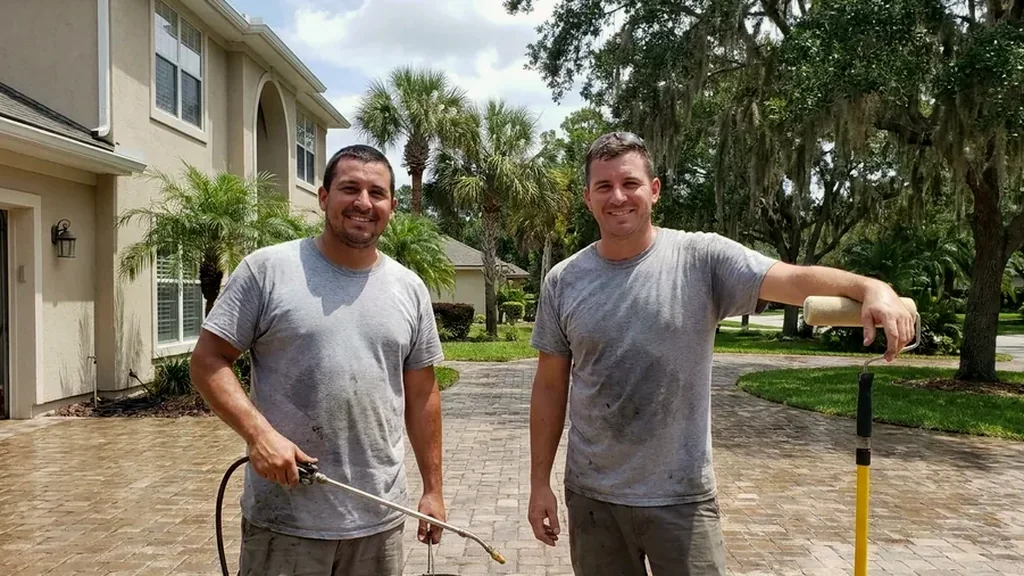
How does a paver sealing job work in Brentwood?
Plan the access
On a street 50 feet wide, the first question is where a truck can sit and how hoses reach the back. The contractor measures the pavers and notes gates, steps and side yards. Sunken sections are marked, because sealing over a dip only preserves it. Photos of low spots and damp corners speed the walk-through.
Wash without spray drift
Fences, siding and parked cars sit close on a 50 by 100 foot lot, so they are masked and the spray stays low. Green growth, dirt and tire marks come off, and rust or oil spots are treated before any coat. Parking and staging on a narrow street take planning, so the contractor asks where a truck can sit.
Fill the joints
The wash lowers the sand, so fresh sand is brushed in. Older bungalow walks often have low joints and take two rounds. Short summer downpours are why this stage matters here. A tone that matches the pavers keeps repairs from showing.
Wait out the damp corners
Marsh-fill ground and shaded fence lines hold moisture. The contractor checks those corners by hand and waits for a dry surface, since damp pavers are the usual cause of a cloudy coat. A damp early morning can mean a later start.
Coat, then keep clear
The finish you chose is sprayed and back-rolled. According to one Jacksonville company, walking is fine within a few hours and driving after about a day. A recoat is usually quoted at two to five years. Pets and children stay off until you hear the coat has set.
Complete paver services in Brentwood
A Brentwood visit unfolds in a fixed order: inspect, wash, refill, dry, seal. Green growth and dirt come off first, and fresh sand fills the joints. Sealer is the last step, applied to a clean, dry surface. To find out how the hours break down on your block, call (904) 849-6734.
Porch walks, side paths, driveways and patios each wear differently. A walk takes steady steps, a side path stays shaded and damp, and a drive takes tires. When you book your free estimate, say which of these you have. Each gets its own plan.
Choosing a product comes down to what is already on the pavers and how the surface is used. A bungalow porch walk often suits a quiet matte coat, while a drive may take a tougher look. If a solvent-based coat is already down, a water-based product is off the table. Call (904) 849-6734 and compare the options for your home.
Rain builds from May to September, and brand-new pavers should wait 60 to 90 days before a first coat. A dry surface matters more than any month. Damp corners near fences need extra time. To pick a date for your street, book your free estimate.
Questions to ask before you hire
- Is there anything I should move, or a gate I should leave open, before you arrive?
- Will the pavers be slippery around the pool once the sealer is on, and can you mix in grit?
- Do the stains need to come out first, so the sealer does not lock them in?
- Are my pavers concrete or travertine, and does that change the sealer you pick?
- What can you do about the white powder that keeps coming up on my pavers?
- Do you treat the weeds and ant hills in the joints, or only pull what shows?
- Will the person who gives me the estimate be on site for the work?
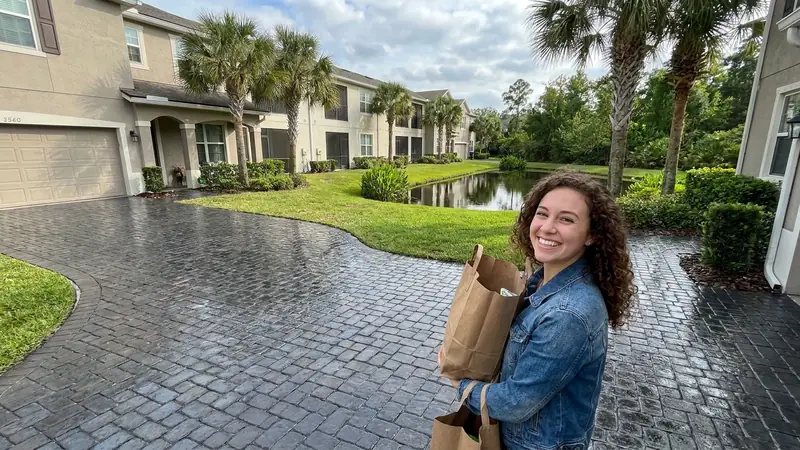
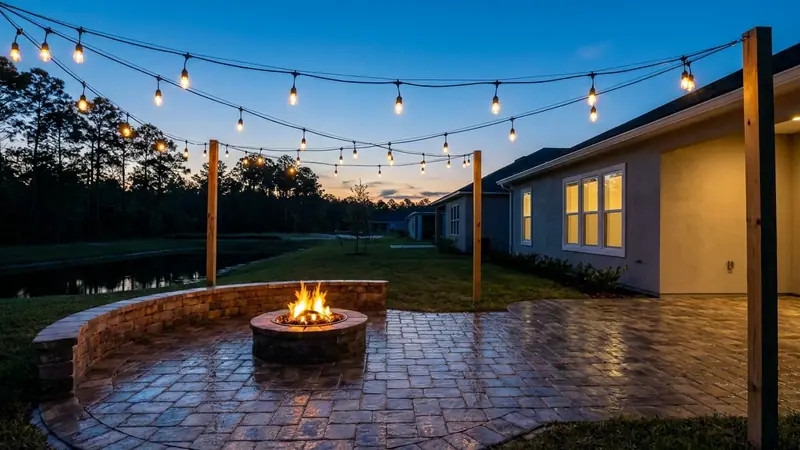
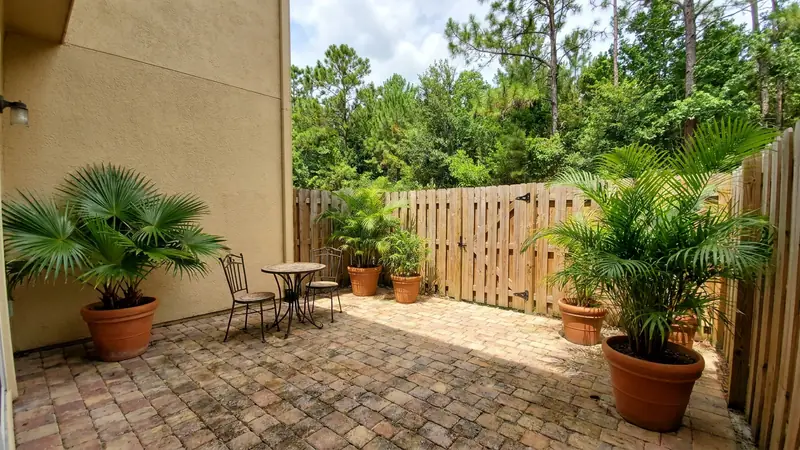
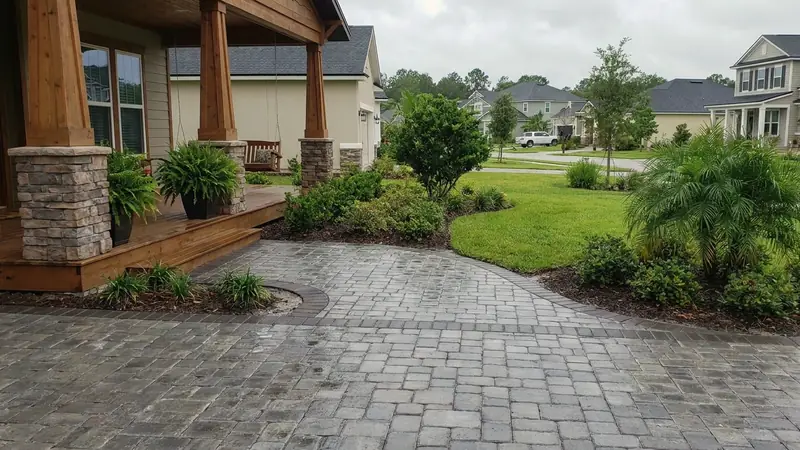
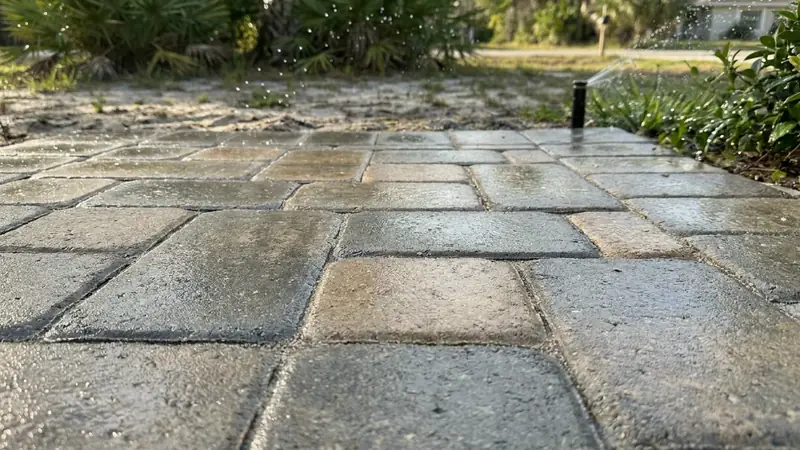
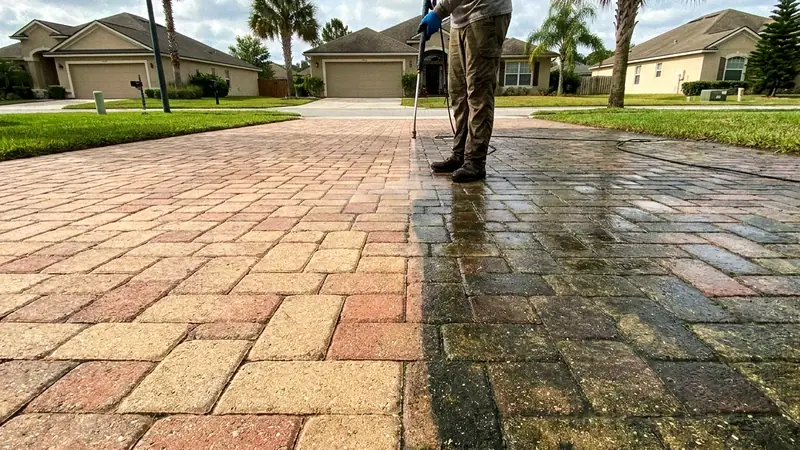
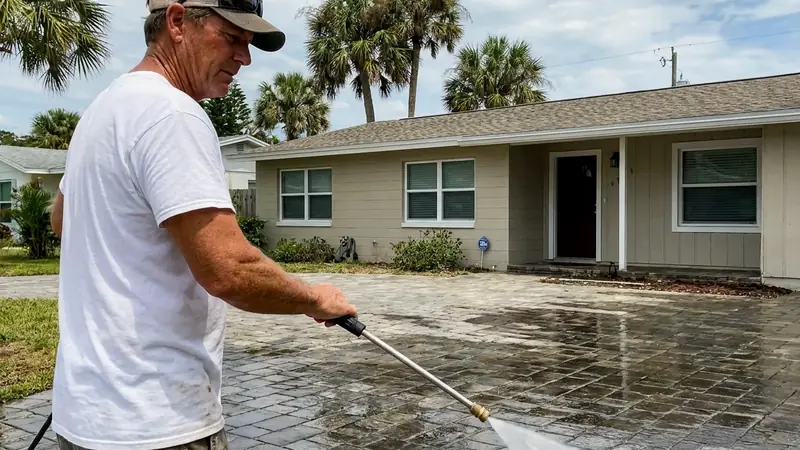
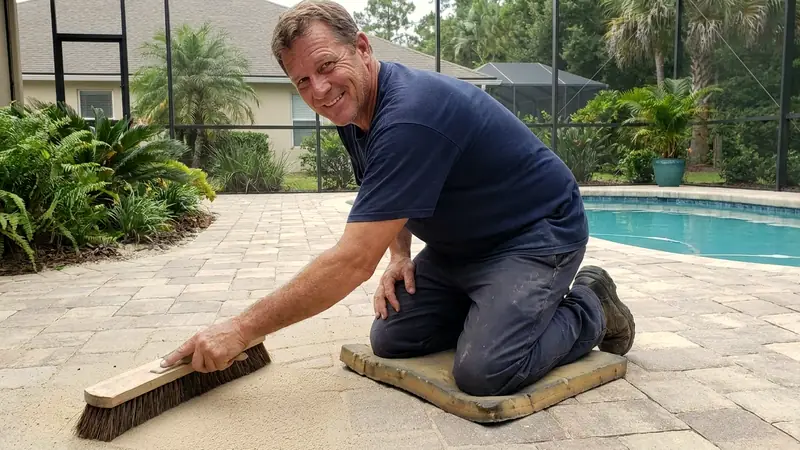
What do sealed pavers look like around Brentwood?
Why local matters in Brentwood
Brentwood work starts from a 1913 plat laid out around marsh and Longbranch Creek. Pavers there face damp ground and narrow lots. That history decides how much rinsing and sand come before sealing. To reach someone who works these blocks, call (904) 849-6734.
Layout matters too. Streets are 50 feet wide and lots average 50 by 100 feet, so a crew parks and stages gear carefully. A contractor from nearby asks about shared fences and neighbors. If you are unsure what applies to your lot, book your free estimate and describe it.
Timing matters too. Summer storms arrive in short, heavy bursts, so a good crew starts early and watches the sky. A contractor who knows the area plans extra drying time near damp corners. To ask how a job would be scheduled on your block, book your free estimate.
What landmarks help a contractor find my Brentwood street?
Start with Catherine Hester McNair Park, also called Brentwood Park, which the city opened in 1929 and which has a Neoclassical bandstand from 1932. The Brentwood Branch Library at 3725 N. Pearl Street sits in the former Brentwood Theatre, a Moderne building from 1941 with 540 seats, and a new 20,000 square foot library is planned at 3750 Springfield Boulevard. If you live near either site, call (904) 849-6734 and say so.
Woodbine Street once carried streetcars to downtown, a 20-minute trip before 1936. The Donald Ross golf course opened in 1923, reopened in 2000 as a nine-hole course run by the First Tee of Jacksonville, and gave Golfair Boulevard its name. Brentwood Elementary was built in 1915 and expanded in 1928, 1929 and 1934. If any of these is within sight, book your free estimate and name your cross street.
Frequently Asked Questions
Why is paver sealing so expensive in Brentwood?
Labor and prep, not the sealer, make up most of the cost. On a tight Brentwood lot, careful rinsing and hand-carried gear add time. Small areas run higher per foot.
Which water-based sealer do Brentwood contractors choose?
Contractors match the new sealer to what is on the pavers now. Water-based sealer cannot be laid over solvent-based, so the old coat rules. Hold on to the product name.
How long does paver sealing last in Brentwood?
Expect a quoted recoat window of two to five years. Shade, damp ground and tires can push a Brentwood walk toward the short end. A paver that darkens and absorbs water instead of beading has lost its coat. Ask when the coat needs another look.
What does re-sanding and sealing pavers cost in Brentwood?
Plan on $1.75 to $3.25 per square foot, the published Northeast Florida range for clean, sand and seal. Damp-ground growth, lost sand and old coats move a job inside it. Check that the quote lists square feet.
Can a landlord in Brentwood order paver sealing?
Yes. The owner decides, and a quote carries no obligation. About 53.71 percent of occupied housing in ZIP 32206 is renter-occupied, so many Brentwood owners are landlords. Share the address and any tenant access notes. A written quote with each unit address helps when several rentals are priced together.
How long should I wait to seal new pavers in Brentwood?
One paver company says to wait about 60 to 90 days so trapped moisture escapes and white haze can be treated first. Another Jacksonville company advises 30 to 60 days. Ask the contractor what fits your pavers. Brand-new pavers also need their joints checked before the first coat.
Will sealing fix sunken pavers on my Brentwood walk?
No. Sunken pavers need repair before sealing, because a coat only preserves a dip. Low sections get reset first, then the whole area is washed and sealed. Photos of the sunken spots help price the repair. Water collects in a dip, which is part of why it keeps sinking.
Does marsh-fill ground change paver sealing in Brentwood?
It can. Brentwood was platted around marsh along Longbranch Creek, and damp ground keeps pavers wet longer. The contractor checks damp corners by touch and waits for a dry surface before sealing. A level, dry day suits the first coat after a wet week.
Nearby areas we serve
Ready for a Free Estimate in Brentwood?
Call (904) 849-6734 and tell us about your pavers.
Free, no obligation